
I won this Pokémon Sapphire in an eBay auction, along with a faulty Game Boy Advance SP motherboard. The game was listed as not working, and the seller claimed it had caused the SP to malfunction after they replaced Sapphire’s battery. When I inserted the cartridge into a Game Boy, the system wouldn’t power on and acted as if there was a direct short to ground. The included motherboard had a blown fuse—a strong indication of a short on the game PCB.

I noticed that the positive solder pad was torn. The previous owner had added a loop of wire to secure the battery connection and attempted to reconnect the original trace. Additionally, I removed solder bridges on the FLASH IC, which resolved the short and allowed the system to boot. However, the Nintendo logo was corrupted and the game would hang at the BIOS screen. It became obvious that there was more trace damage on the board.
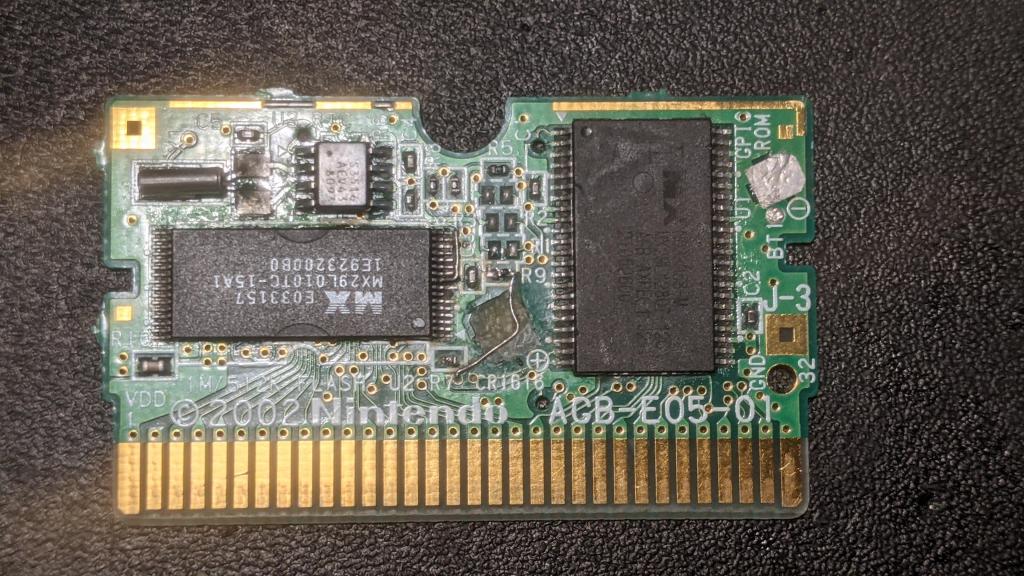
I wasn’t comfortable with how close the loop of wire was to the pins of the ROM and FLASH chips, so I decided to replace it. I ran a new jumper wire through the board, using the via next to R7 to anchor it securely, and then connected it to R9. The resistor at R9 was damaged, so I replaced it as well.
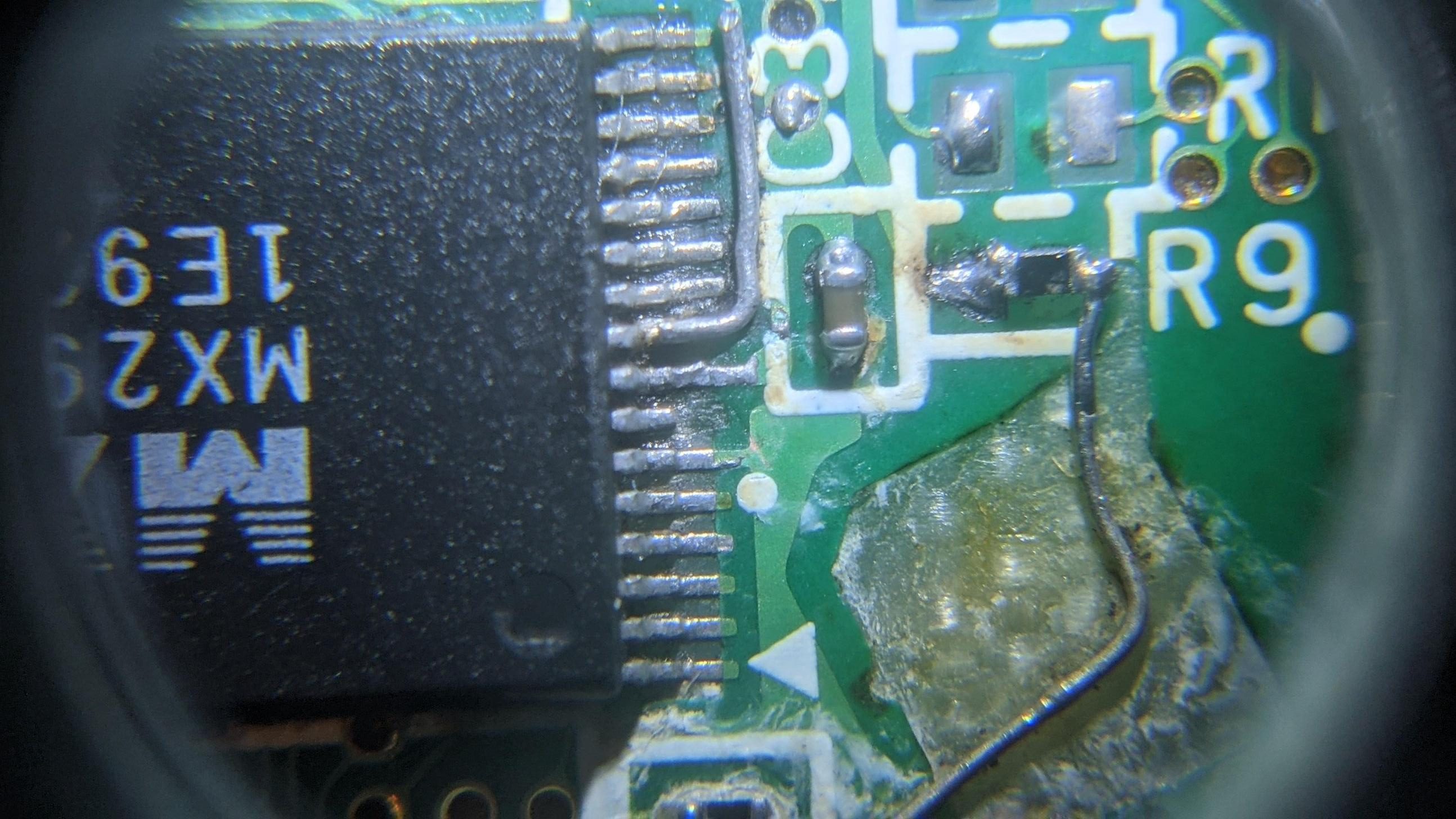
The trace next to C3 was completely pulled from the board. To repair it, I carefully scraped away the solder mask to expose the trace and then ran a jumper wire from the pin to reconnect it. Pin 7 on the FLASH chip is missing a solder pad but this isn’t connected anyway.

I then created a new solder pad and secured it in place with solder mask. This also covered R7 to prevent it from disconnecting from my jumper wire when I applied heat to solder a new battery.
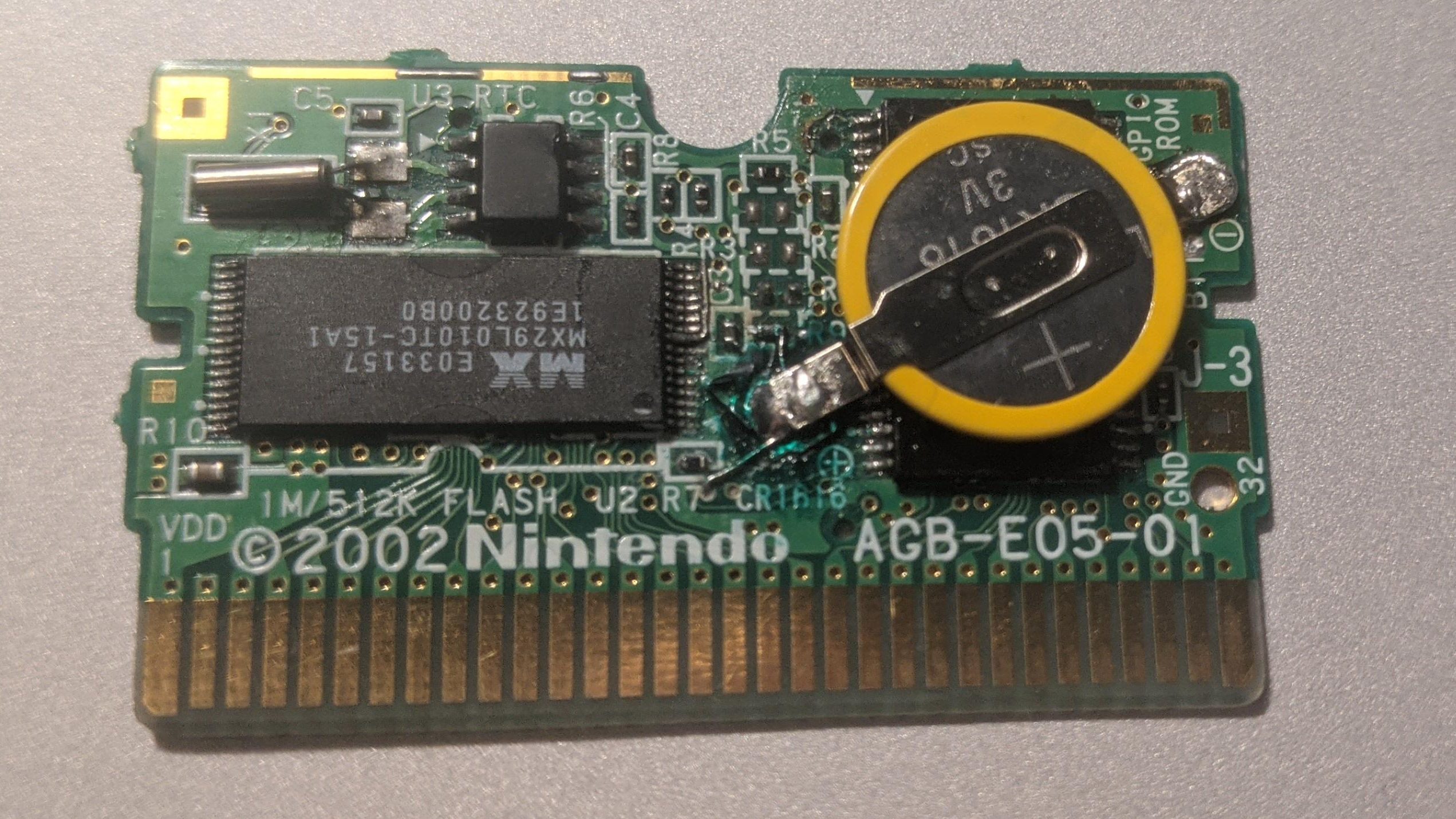
Done! The save game belonged to a player named Emma, who had played for 4 hours, earned 3 badges, and had 2 Pokémon: a level 8 Geodude and an impressive Marshtomp at level 33.

 RETROBOOGIE64
Leave a comment