
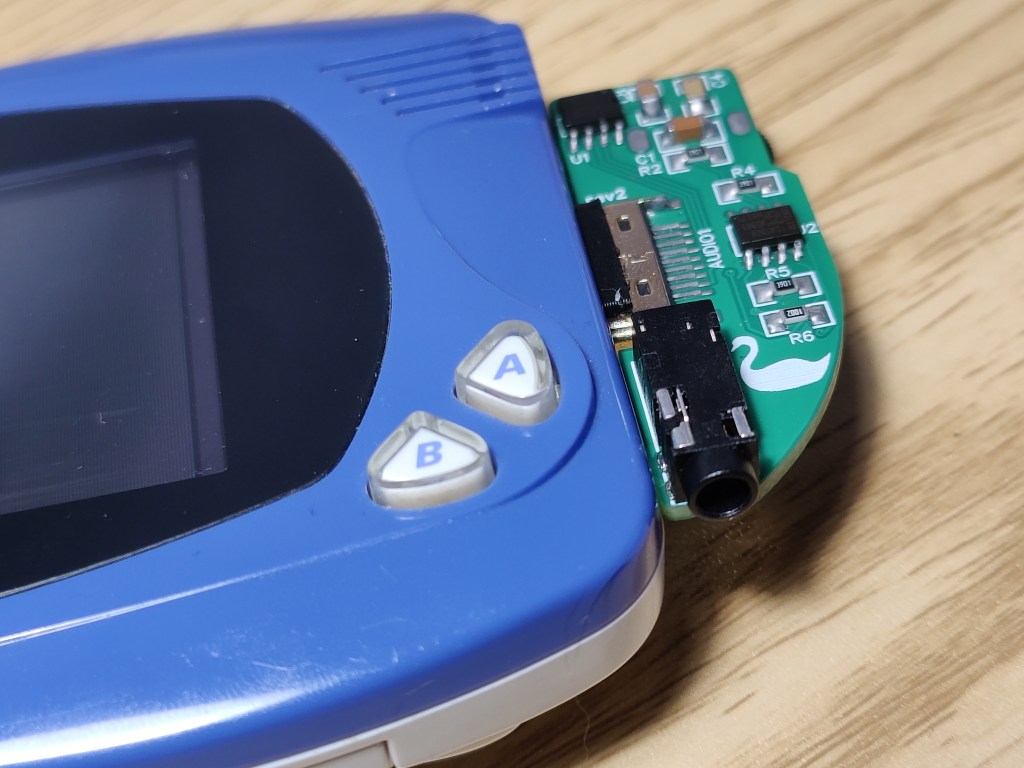
If you’re not aware, the WonderSwan didn’t have a built-in headphone jack. Kind of like the Game Boy Advance SP, where using headphones required a special accessory. Unfortunately, headphone adapters for the WonderSwan aren’t very common. And unlike the SP, which uses a simple pass-through adapter, the WonderSwan needs a few extra components, like a volume wheel, strangely enough.
Luckily, Zwenergy created an awesome open-source headphone adapter. This is especially great since official adapters can go for over $200!
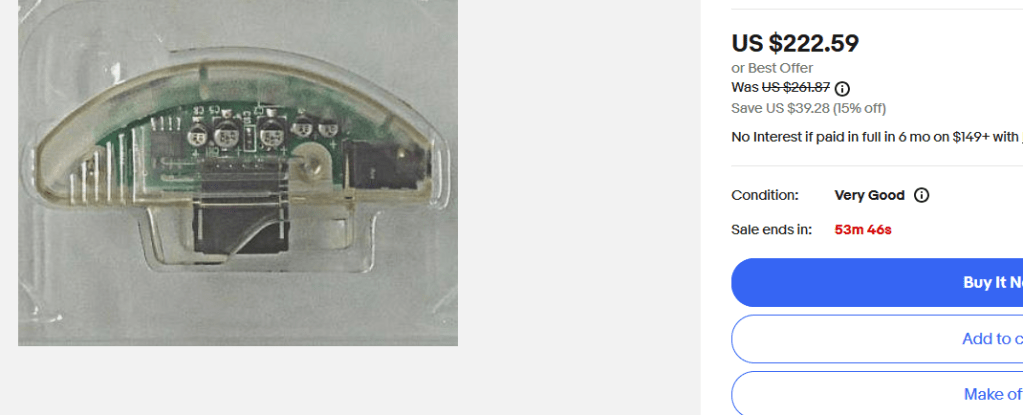
There are other types of adapters for the WonderSwan, not just the compact style, but they still typically run around $50 to $80 USD.
Unfortunately, Zwenergy’s design doesn’t have an enclosure. Personally, I love an exposed PCB, it looks cool, but leaving the board bare can be a bit problematic. Analog signals are sensitive, and just placing a finger on certain components can introduce noise. While playing games, I noticed that touching the board sometimes causes a high-pitched hum in the audio, especially if you rest your thumb on R5. You might also hear some static if your thumb touches the HDMI pins. It’s not terrible if you’re playing at higher volume, but it’s definitely noticeable.
It’s not a failure of the PCB design, it just needs a case. And that’s what I decided to do with my weekend: make one.
Years ago, when I went to college, I majored in animation. This was pre-1080p days, so yeah, it was a while ago. I learned 3Ds Max, and it’s a skill I never really lost. I’m no draftsman, and I was taught modeling for animation, so this 3D model is pretty jank. Vertices aren’t on the same plane like they should be, and I’ve got hidden polys inside the model because I was lazy. Also, I’m using 3Ds Max 2011. I remember when that was the new version. I miss the mid-2000s, back when you, you know, actually owned the software you bought. Anyway, the model is bad… but it works.

I remember back in class, they kind of taught us how to set up scenes like this, usually when you wanted to model a car or something. I didn’t have blueprints, just some photos I took with my phone. They had perspective and lens distortion, but it was going to be good enough.
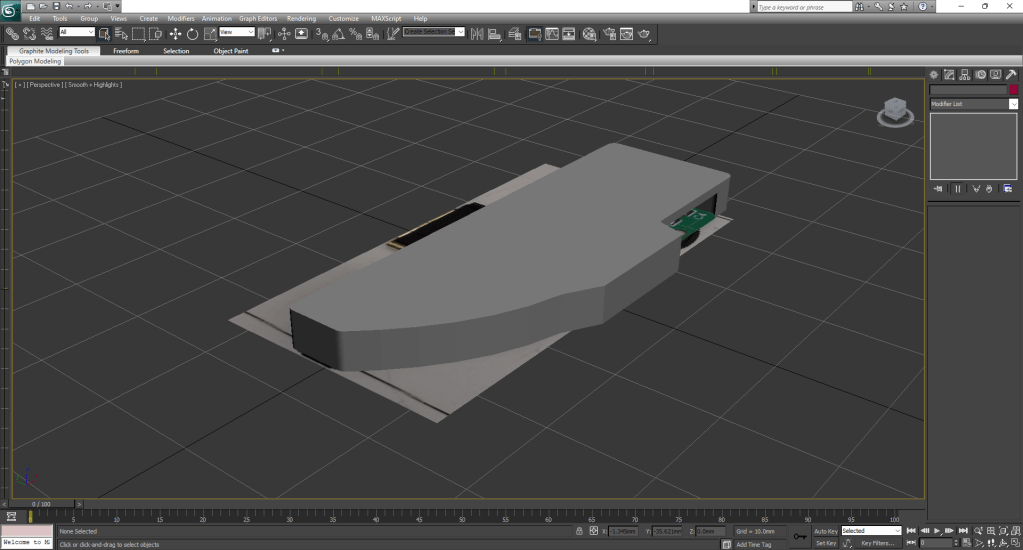
The last time I made a 3D model was back in 2008. I ended up switching majors, so I didn’t need to make 3D models anymore. I still used 3Ds Max for graphic design, mostly fluid and smoke effects. But anyway, I am rusty. I was never great at it to begin with, but man, you can forget a lot in 17 years.
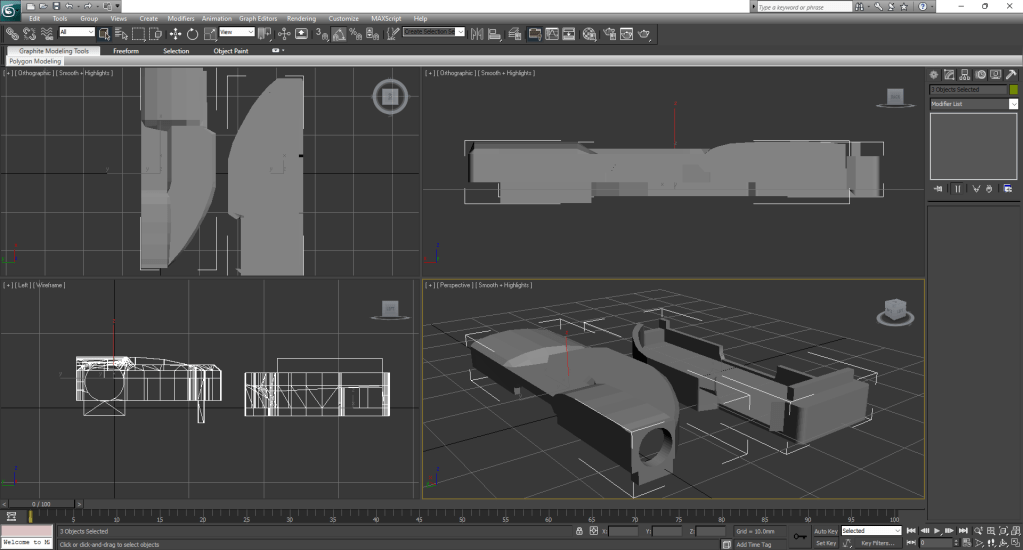
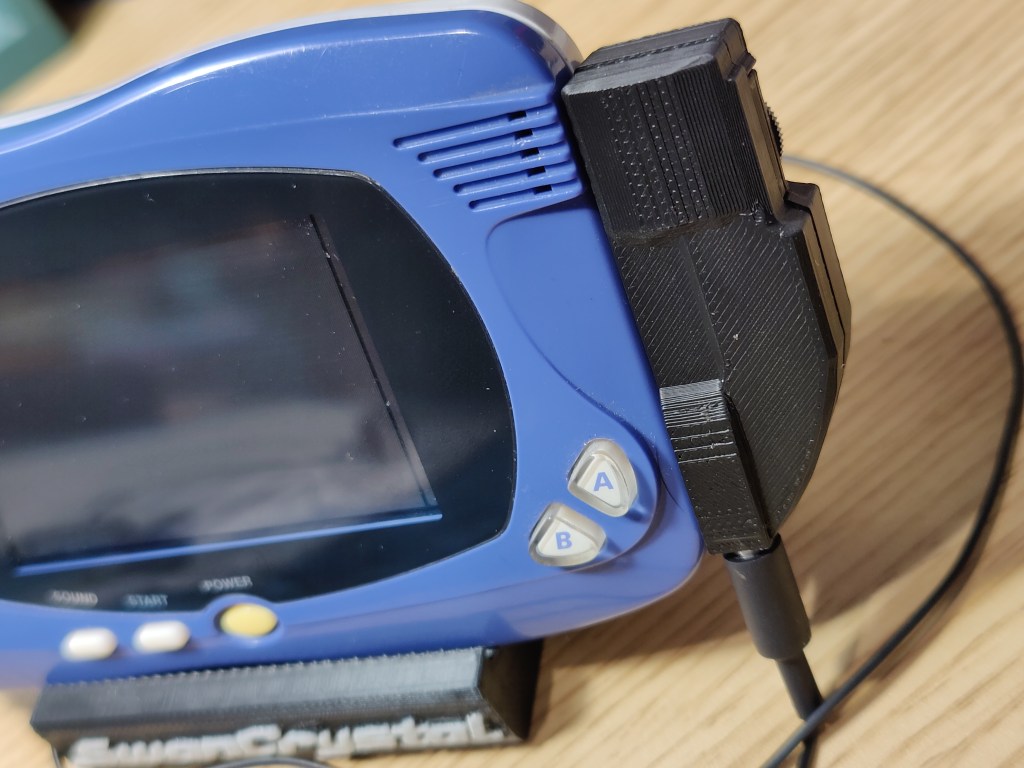
I started with a spline, extruded it, and then began box modeling. It went through about 18 revisions as I tried to get the case to fit well with the PCB and components. Since these are handmade boards, a shift of just 0.3 mm on the headphone jack could cause it to foul on the case, so your mileage may vary. Once I got the front and back to click nicely together, I created some contours so it wouldn’t just be two flat pieces. I wanted to take style cues from the SwanCrystal, but I didn’t want it to look awkward on a monochrome WonderSwan. So I made it equally awkward on any WonderSwan. Also, I’m so bad at 3D modeling I can’t take styling cues from anything. I don’t have the know-how to implement any design.
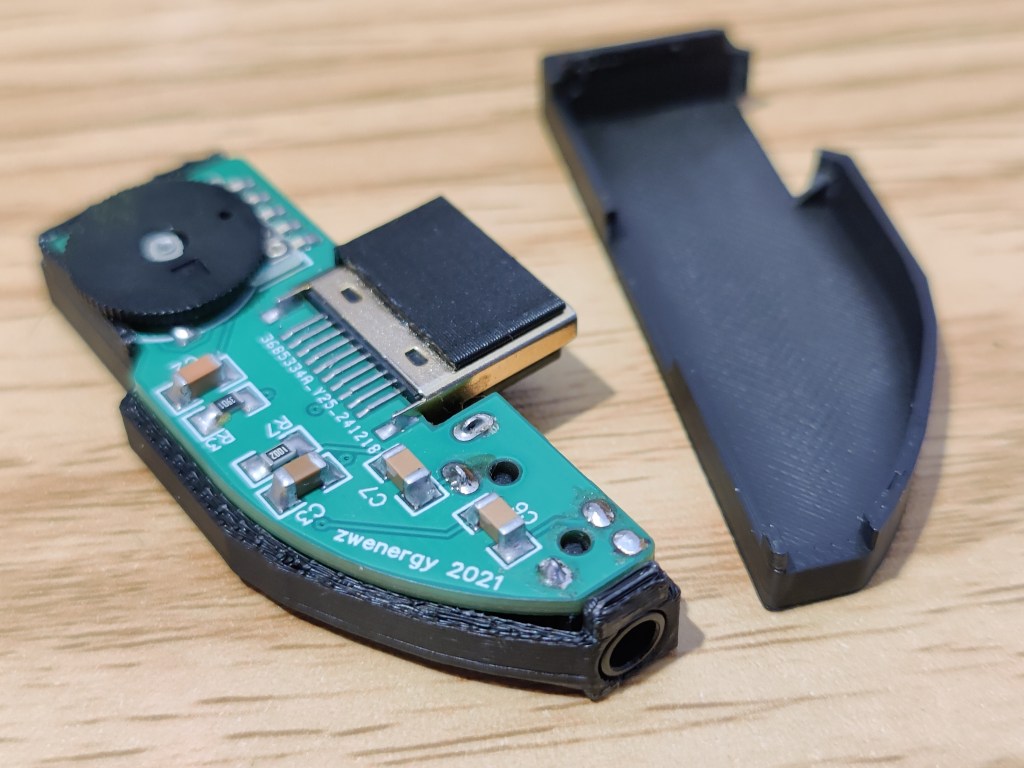
Since there weren’t any holes on the PCB for hardware and space was limited, I wasn’t sure how to even add fixing points. So I decided to go with a press-fit design. It’s not ideal, the back might fall off if you drop it, but it clips back on easily. Plus, whoever prints this won’t have to buy any hardware.
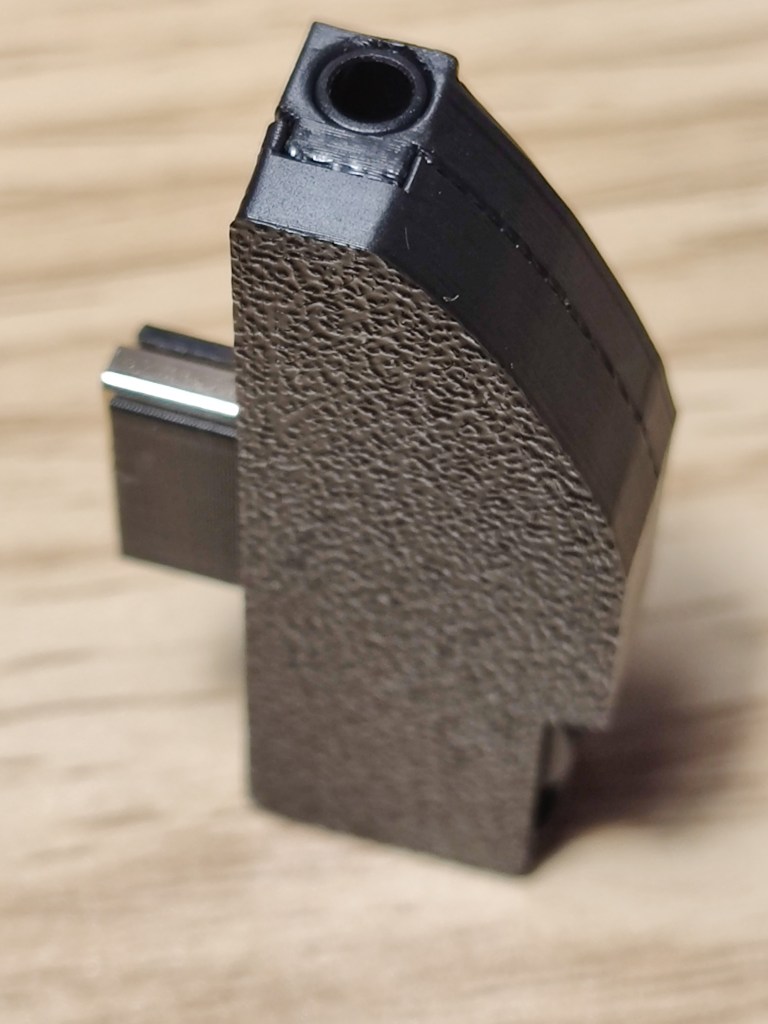
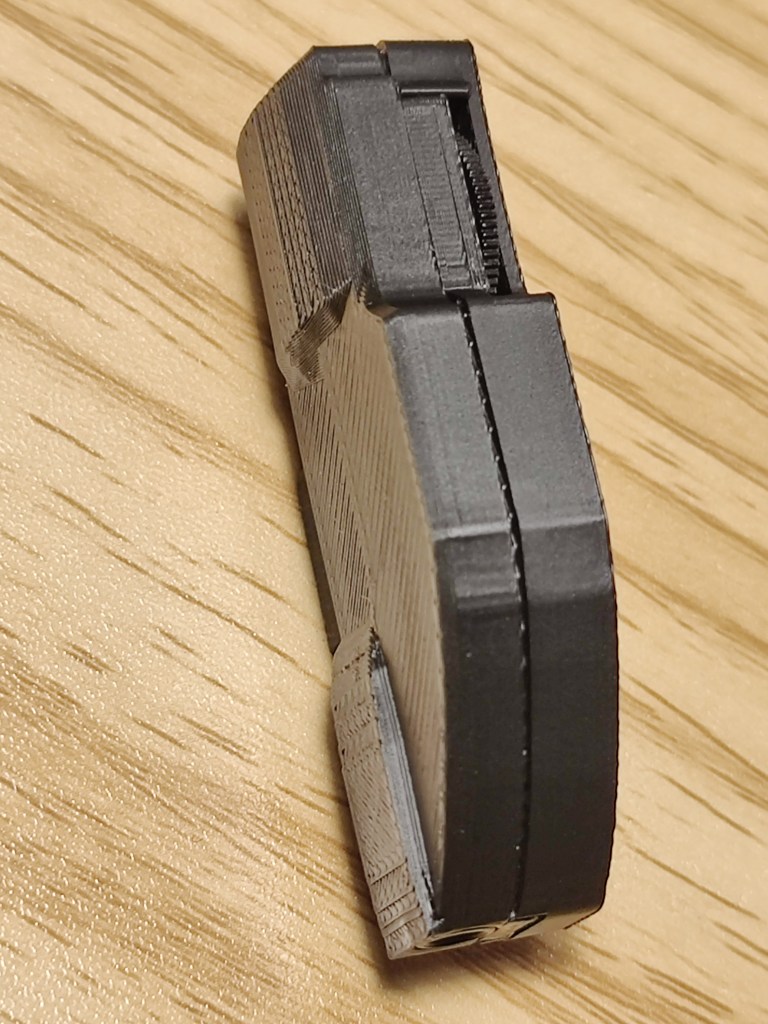
I was really happy with how the volume wheel turned out. I was pretty stressed trying to make sure it was functional without scraping the case. The fact that it looks neat and doesn’t interfere with anything really motivated me to finish the whole project.
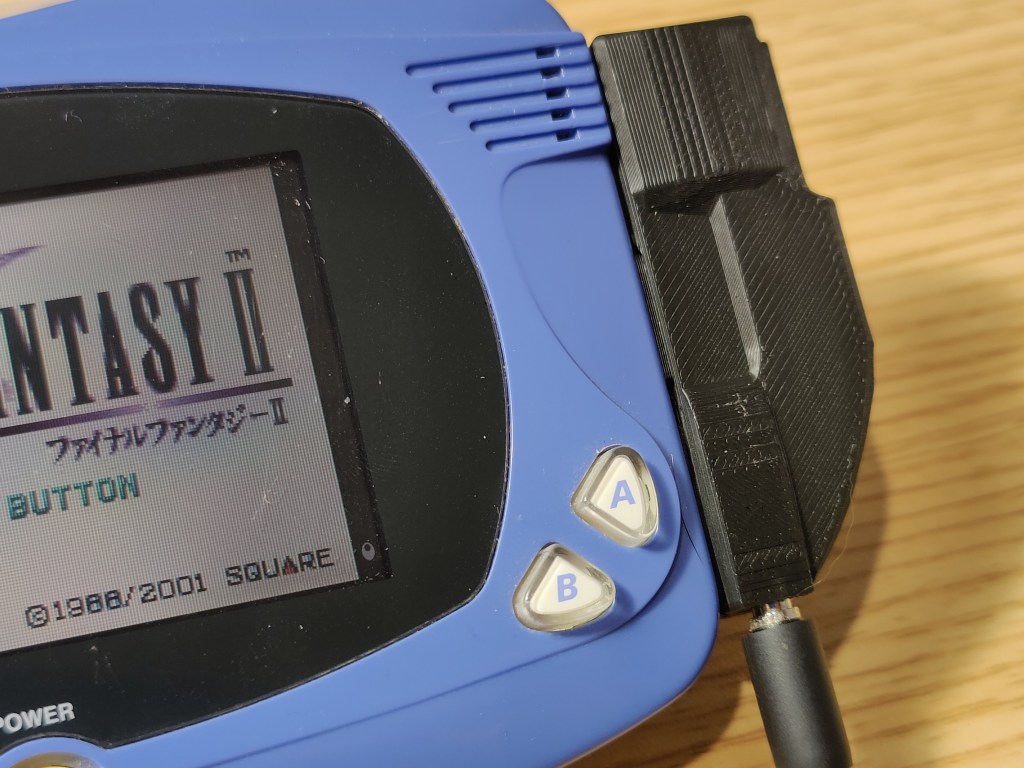
I’m going to upload the STL files to my Ko-fi. They’ll be free to download, but any donation helps and is much appreciated. I might upload the files elsewhere later if I find a better platform for visibility, but for now, Ko-fi is where they’ll be.
It was fun getting back into 3D modeling, but between fixing my drift car, studying Japanese, and work, I don’t see much room for 3D modeling in the future. So this will probably be the only Retroboogie64 3D print for a while, or ever.
Until next time—later, nerds!


 RETROBOOGIE64
Leave a comment